


.avif)
Because our dogs naturally communicate in different ways than polite human society expects, we pet parents often find their requests overstimulating. Who wants to be incessantly barked, whined, or pawed at on a bad day? (I definitely don’t!)
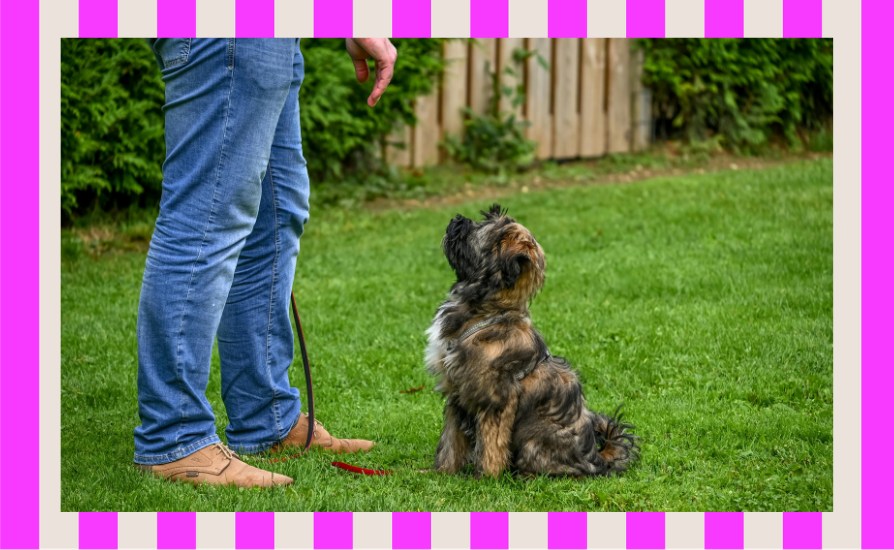
One solution to this is a concept called “sit to say please.” Many professional dog trainers teach clients to have their pups perform a less-intense behavior—sitting and offering eye contact—to make a request. But should we always tell our dogs to sit and wait for exciting things? Does the position their body is in really matter? And are there times where asking for this level of restraint is, well, asking too much?
As always: The truest answer is “it depends.” Let’s dive into the nuance so you can make the choices that feel right for you!
Why many dog trainers recommend “sitting to say please”
In the “sit to say please” approach, we ask our dogs to perform a calm behavior to gain access to something they want—whether it’s a meal, walk, bathroom break, on-leash greeting, ball toss, or whatever else strikes their fancy—to minimize frustration on both ends of the leash.
If your pup has a habit of barking at you for attention, for example, you can instead teach them that sitting quietly is the actual way to score some pets. This can take some time to teach, especially if your dog already has a long history of making noise to get what they want—but it’s worth the up-front training investment in many households.
Teaching a version of “sit to say please” can help your pup learn to wait briefly at doorways and other thresholds (like exiting your home or car), avoid knocking people over during enthusiastic greetings, and practice short moments of composure throughout the day rather than always giving into their impulses. When done well, this approach can:
- Build your dog’s impulse control around distractions, ultimately improving their emotional regulation in exciting situations.
- Teach that calm, polite behavior is what makes good things happen!
- Reduce your pup’s frustration through a clear pattern (“when I do X, Y happens”) and reduce your own frustration by minimizing frantic behaviors like barking, jumping, pawing, and whining.
- Make it easier to leash your dog up for walks and other activities.
- Improve harmony in multi-dog households by teaching every individual pup how to wait for their own turn.
- Keep your dogs safe by stopping them from bolting through doors or gates.
- Turn more daily moments into training opportunities!
Ways “sitting to say please” can be overdone
That all sounds great, right? Who wouldn’t want their dog to sit politely to ask for attention and play and everything else?
Sitting to say please is a wonderful concept. But even the most useful training strategies can become excessive if we apply them blindly or strictly—without considering our individual pups. Here are a few things to think about.
Holding a sit position isn’t comfortable for every dog.
Some pups physically struggle with extended periods of perfect-posture sitting—especially seniors and large breeds. The surface they’re on matters, too. Slippery floors require more core strength for our dogs to stay upright, and it can be frustrating when their paws keep sliding out from under them. Hot pavement, salted winter sidewalks, and uneven ground can also make it unpleasant for our dogs to sit.
Excitement isn’t always bad.
We absolutely need our dogs to be able to function in human society! But they’re also allowed to feel anticipation. Spend some time considering the difference between healthy enthusiasm and dangerous behavior. What does that line look like for your own pup? Different dogs are more—or less—prone to hyperactive hijinks.
Too much control can increase frustration.
A well-adjusted, fulfilled dog should benefit from regular training. But requiring obedience before letting our pups access any resource at all can quickly exhaust them. Some dogs, like my own sensitive blue heeler, become overly inhibited and stressed about getting it “right.” Others might start to offer compulsive sits because they’ve learned that this magic position unlocks everything—except you might not always know what they want without their ability to provide you with additional context clues.
Asking for a formal sit at a busy doorway might make perfect sense in your life. Asking for the same precise position before every toy toss might not. Ultimately? Training should strengthen our relationships with our companions, not turn every daily moment into a transaction.
Precise obedience can sometimes mask natural body language.
If we’re too rigid in our interpretation of “sit to say please,” we might accidentally encourage our dogs to suppress natural behaviors instead of learning true emotional regulation. (I can speak for my own dog here: She is fully capable of holding a perfect, stationary sit while still feeling overwhelmed or excited!)
Too much focus on obedience alone can also make it easier for us humans to overlook changes in body language, like posture shifts and other signs of pain.
You might ask your dog to sit and wait if…
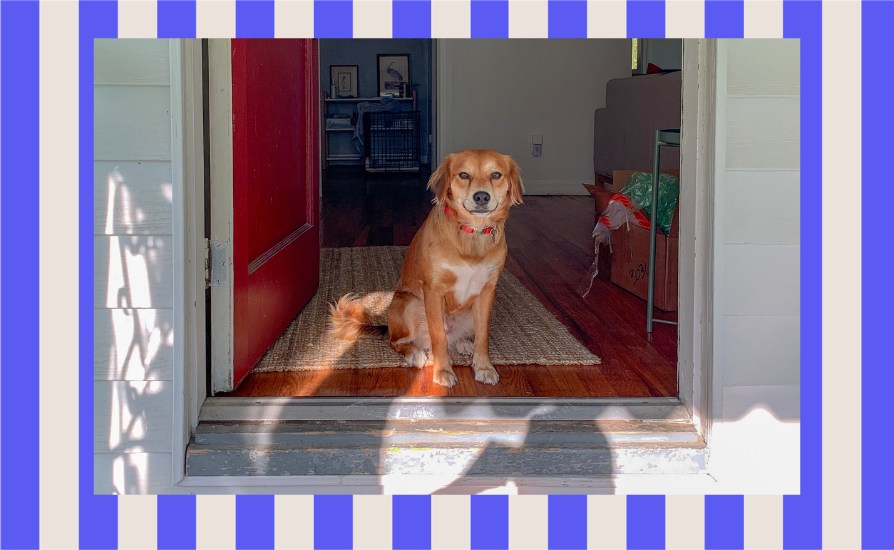
- You’ve been getting frustrated with your dog’s barking and whining demands
- You live near neighbors who’d rather not hear your pup sing the “song of their people”
- Your dog struggles to stay calm when requesting affection
- You live in a busy neighborhood or often have the front door open, and it’s imperative that your pup never runs through without permission
- You routinely interact with friends, family members, or strangers who find your dog’s attention to be a little too intense
- You want to work more impulse control into your pup’s daily life
You might not have your dog sit and wait if…
- Your pup already asks for attention in ways you find acceptable
- Your dog is timid and struggles to express their preferences, so you don’t want to discourage them from any requests they do make
- You and your pup are letting loose in a designated play session
- It’s a special occasion, like reuniting with a favorite person after a long trip away
- The situation doesn’t have any particularly important safety concerns
- Your pup hasn’t been fulfilled lately, so you know their capacity to perform under pressure is a little lower than usual (you might prioritize some sniffy decompression walks or playtime first before asking for more impulse control)
Think about functional skills over perfect obedience
We should teach our pets patience and composure—but requiring a sit before every rewarding experience isn’t always necessary, fair, or even practical. Remember that really good dog training isn’t about robotic obedience for its own sake. It’s about helping people and pets live well together!
When in doubt, ask yourself why you want your dog to sit in a particular moment. If it’s because you think holding a specific position will help them navigate the situation or you want to build that exact skill? Then by all means, sit away. If it’s because you just don’t want your dog bowling over a new friend or rushing through an open door, though, there might be more flexible options to explore—all depending on your pup’s physical comfort, emotional state, age, health, and training history.
Remember it isn’t all or nothing
There are many variations of the “sit to say please” concept. Instead of asking for a precise position, you might reinforce alternative calm behaviors like simply standing still, making eye contact, or keeping four paws on the floor. Some dog parents prefer their pet to lie down, rest their head on your knee, ring a bell, or even gently paw at them. Choose what skills work best for you!

What’s a Rich Text element?
The rich text element allows you to create and format headings, paragraphs, blockquotes, images, and video all in one place instead of having to add and format them individually. Just double-click and easily create content.

Static and dynamic content editing
Static and dynamic content editing
A rich text element can be used with static or dynamic content. For static content, just drop it into any page and begin editing. For dynamic content, add a rich text field to any collection and then connect a rich text element to that field in the settings panel. Voila!
How to customize formatting for each rich text
Headings, paragraphs, blockquotes, figures, images, and figure captions can all be styled after a class is added to the rich text element using the "When inside of" nested selector system.