


.avif)
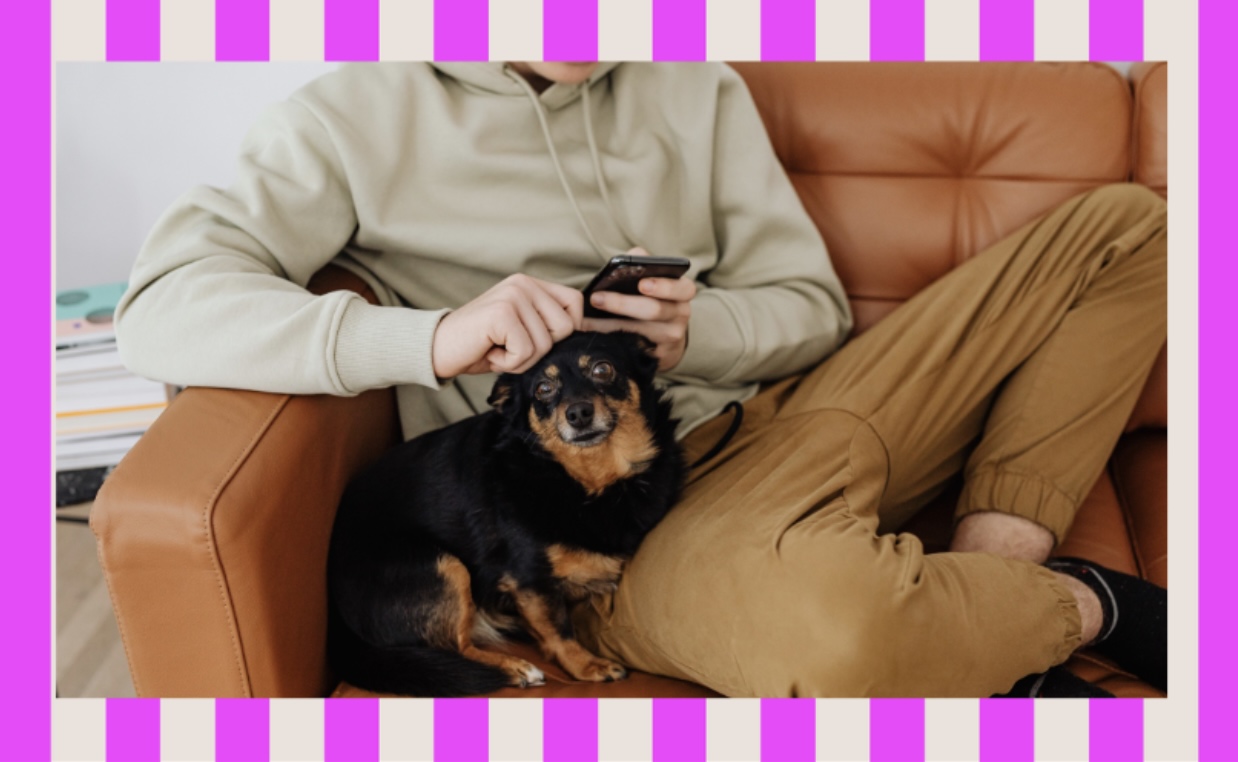
Somewhere along the way many of us internalized the idea that being a good pet parent means always putting our companions first. We skip our own workouts to squeeze in extra dog walks. We cancel activities we were looking forward to because we feel guilty about not being home with our cats. We eat snacks for dinner only after preparing full-scale enrichment feasts for our pets.
Of course it’s wonderful to give our cats and dogs the best life we can—but that shouldn’t mean we force ourselves to run on empty either! Taking care of yourself isn’t in competition with taking care of your four-legged family members. It’s part of the same job.
Here are some questions to ask about your self-care standards, complete with ways to recharge both with and without your pet by your side.
Hey pet parents, how are you really doing?
“Looking after a new dog on top of an already busy lifestyle can sometimes mean you put self care on the back burner,” writes the team at Animal Wellness. “That can lead to fatigue, burn-out and other problems.” Here’s a little check in.
- When’s the last time you ate a full, nutritious meal? When’s the last time your dog or cat did?
- When’s the last time you woke up feeling energized and ready to face the day? When’s the last time your dog or cat did?
- When you think about walking your dog or playing with your cat today, do you feel excited? Or does it sound like a chore?
- Are you more aware of your pets’ body language than your own emotions?
- Do you show yourself the same kindness and understanding you show your pet?
- If something unexpected came up with your pet right now—a last-minute vet visit or strange new behavior—do you feel like you’d have enough energy to help them through it?
Care of ourselves helps us care for our pets
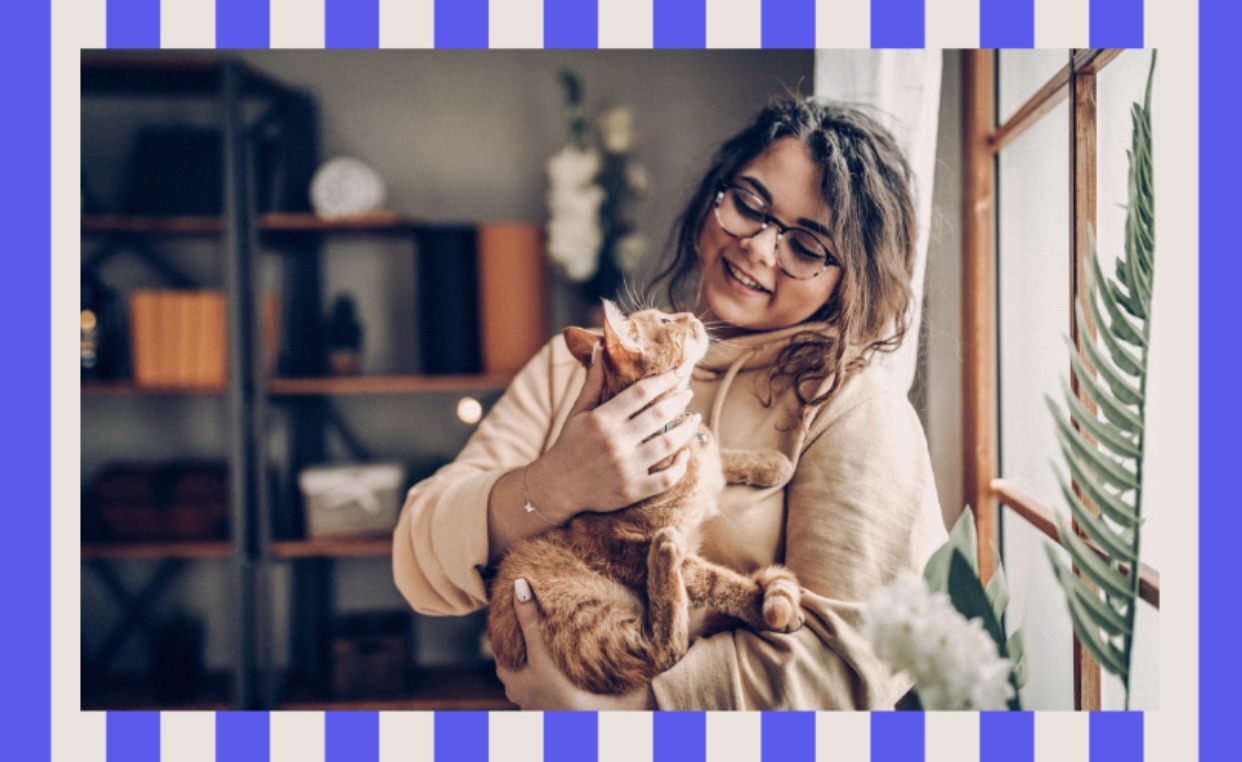
“I take better care of my pets than I take care of myself” has become a bit of a dog-and-cat-guardian flex. It’s easy to feel proud of our sacrifices: My cat eats better than I do, my dog gets more exercise than I do, my pet has seen the vet more recently than I've seen a doctor… These half-jokes are all meant as signs of our devotion.
But if you sit with what those phrases really mean for a minute, they start to sound problematic, don’t they? Our dogs and cats don’t benefit from us skipping meals or sacrificing sleep or otherwise ensuring every last ounce of our energy goes only to them.
This is, of course, because we all know we can’t pour from an empty cup. If we let ourselves get too exhausted, eventually something will have to give—and it’s far better to take occasional breaks from our pet parent duties than to suddenly collapse beneath their weight entirely.
It’s also because our pets are better than we might think at picking up how we’re feeling. Dogs in particular are often highly attuned to human stress. (As the guardian of a herding dog, let me tell you: She sees into my very soul.) If we’re frazzled and rushed and anxious ourselves, our pets probably know—and it’s probably not fun for them either.
When we take time to decompress instead of pushing through overwhelm, we’re making sure the nervous system that’s going to be walking, training, feeding, playing, and snuggling with our pets for the rest of the day is ready for all that’s to come! So say it with me: Our dogs and can’ts don’t want us to wither away all in an attempt to prove how much we love them. The best way we can show them love is by focusing on what matters most: feeling satisfied together.
Pet-parent self care featuring our four-legged companions
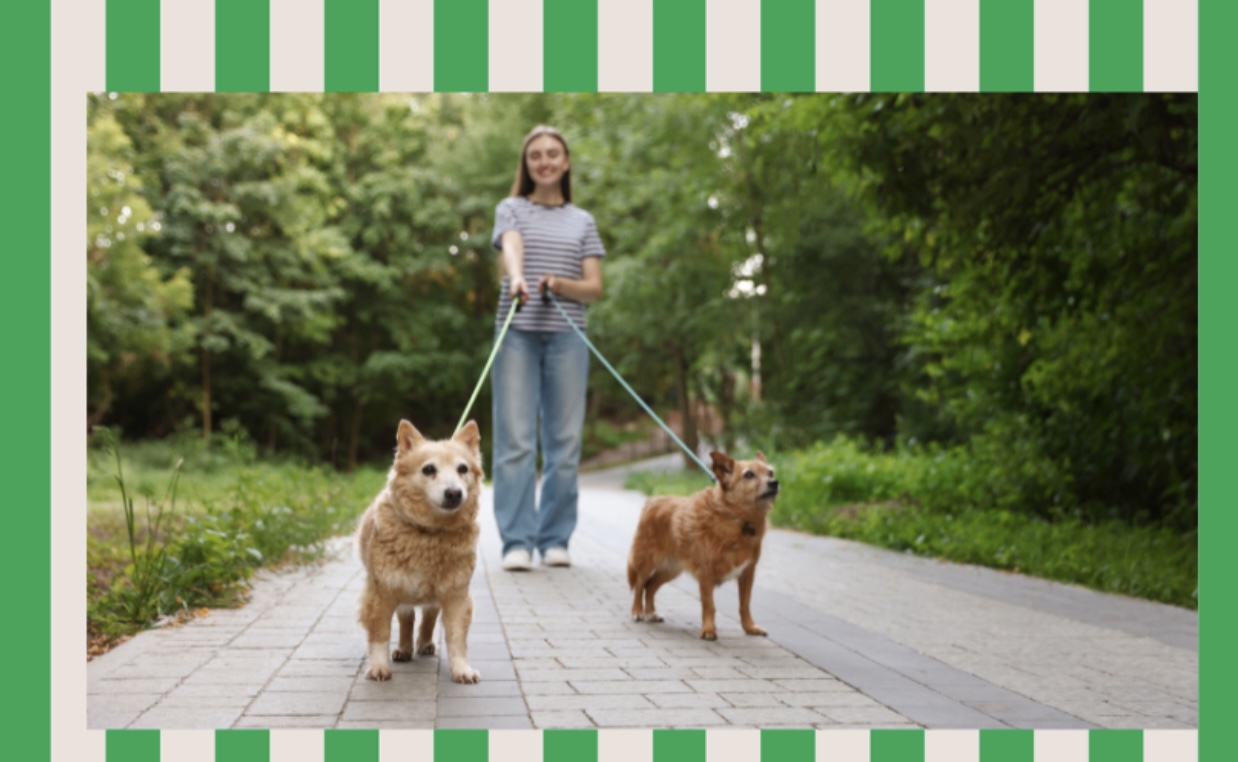
We don’t always have to choose between “me time” and “pet time.” Here are some go-to ideas to reset with your dog or cat nearby. (As a bonus, practicing these activities can help us build the muscle of paying attention to our own feelings and needs even when we’re focused on our pets, too.)
- Meditate together. Sit or lie down near your dog or cat, and go through a short breathing exercise or body scan. This can help both of you feel calmer over time!
- Take a sniffari. If you have access to a quiet, open space? Use it. If not, do your best with what you’ve got. Try to take your dog for a walk where they’ll get to sniff as long as they want. Follow their lead and take the time to notice what’s around you: sights, sounds, the way the air feels against your skin.
- Shared enrichment time. Put down a snuffle mat or a frozen lick treat for your dog or cat, then sit nearby with a book, craft, or journal to work your own brain a little.
- Invite them into your exercise. Find ways to bring your pet into your stretching, lifting, or other workout routine. (I speak from experience: Cats seem to particularly love getting all up in your business during yoga poses!)

It’s also okay to recharge on your own
This is hard for top-notch pet parents to accept, but it’s true: There’s nothing wrong with enjoying some solo time on occasion. In fact, I find that embracing a few experiences without my dog—maybe walking on a trail that isn’t pet friendly or sneaking some one-on-one play with my niece—often helps me connect with her more when we do reunite!
- Protect your own basic needs first. We wouldn’t dream of asking our dogs to conquer a new training challenge if they weren’t getting enough food and rest, right? So why do we expect it from ourselves? Sometimes I find it helpful to think about my own health and enrichment a little bit like how I think about my dog’s. Have I gotten enough sleep? Have I eaten nutritious foods? Do I have any unmet basic needs?
- Don’t be afraid to ask for help. Trusted friends, dog trainers, and pet sitters can help you satisfy your pet care requirements when other obligations feel too heavy (or you just need a pause to return at your best).
- Consider a humans-only hobby. Many of us have the instinct to make our pets our whole identities. We come by it honestly—it’s because we love them so much! But engaging in activities just for us can help us make new connections and grow, which means we’re even more well rounded for our four-legged family members. My dog benefits from me being a full person with a range of interests!
- Separate shame from rest. Try to let go of any guilt—either self-imposed or thrust upon you by the internet or comparison game with real-life friends—you feel when you aren’t able to do everything you wanted in the week. Missed a walk? Stuck to a shorter play session? No big deal. One single day doesn’t define your whole relationship. (More on this next.)
Think about zooming out, not in
If you ask your pet to handle a little more alone time or a little less activity because you need to recharge, you’re not a pet parent failure. Every bond requires give and take! Instead of fixating on less-than-perfect days, focus on the big questions:
- Are you and your pet happy together most of the time?
- Does your dog or cat have their basic needs met on a regular basis? Think safety, nutrition, exercise, and enrichment. Something is better than nothing!
- Do you routinely get your own needs met, too?
If the answer is yes, you’re doing just fine. We’re cheering for you!

What’s a Rich Text element?
The rich text element allows you to create and format headings, paragraphs, blockquotes, images, and video all in one place instead of having to add and format them individually. Just double-click and easily create content.

Static and dynamic content editing
Static and dynamic content editing
A rich text element can be used with static or dynamic content. For static content, just drop it into any page and begin editing. For dynamic content, add a rich text field to any collection and then connect a rich text element to that field in the settings panel. Voila!
How to customize formatting for each rich text
Headings, paragraphs, blockquotes, figures, images, and figure captions can all be styled after a class is added to the rich text element using the "When inside of" nested selector system.