


.avif)
“If she doesn’t like it, she can just walk away,” a stranger once said after I told them they couldn’t pet my dog. They had approached us at a coffee shop patio, hand already outstretched, intent on giving Scout—my sweet-but-shy blue heeler—some affection.
“She might feel trapped, actually,” I replied. “She’s not always good at making space when she’s nervous.”
The friendly stranger seemed surprised, and I understood where they were coming from. For a long time, I also assumed that if a dog stayed in place while I approached and pet them it meant they were enjoying the interaction. If they weren’t, why wouldn’t they leave?
Well, in reality, our pups can be more complicated than that! Dogs don’t always move away on their own when they’re uncomfortable. Some freeze up or try to diffuse the situation by appeasing us… which can make it difficult to accurately interpret their behavior.
Here’s what to know to prevent confusion and conflict on both ends of the leash!
Is it really as simple as fight or flight?
You’ve probably heard of the fight-or-flight response. It’s common knowledge that when animals—including humans—perceive a threat, our bodies prepare to either confront the danger or flee away from it.
But it turns out “fight” and “flight” aren’t the whole story. People, pets, and wild creatures do more than just gear up to face stressors or run off into the distance. A wider array of recognized reactions has pushed many psychologists to use the term “acute stress response” or even “fight-flight-freeze-fawn” instead of the too-simple “fight-or-flight” label of decades past.
Dogs respond to discomfort in different ways
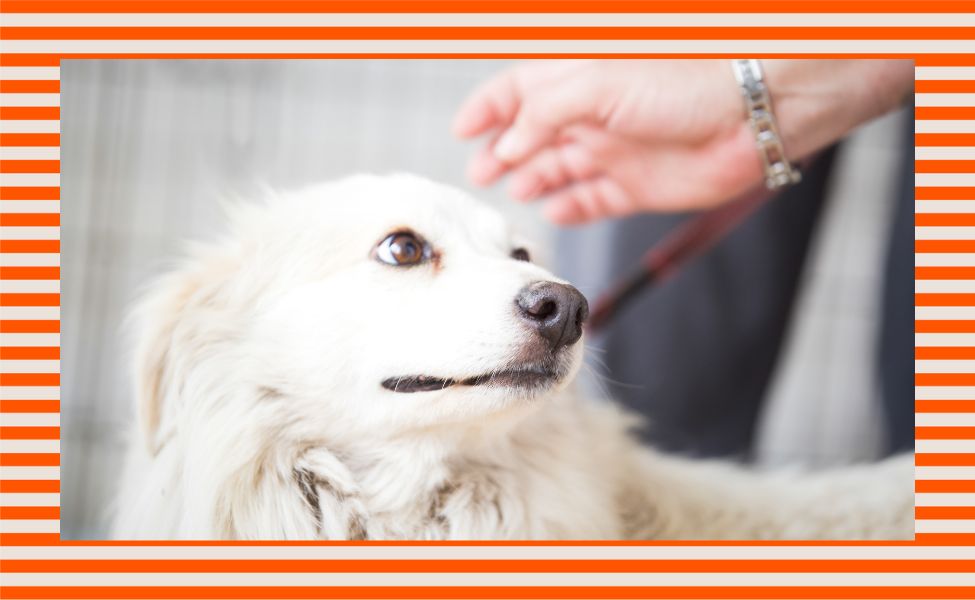
Remember: Every dog is an individual. They won’t all react the same way even if they’re experiencing the same emotion! And depending on variables like location and how they feel physically on a given day, it’s perfectly normal for one pup to switch between all these responses in different situations.
Flight: When dogs move away from things they don’t like
Some dogs do routinely make space from stimuli they find unsettling—whether it’s a stranger coming on too strong, a plastic bag blowing in the wind, or maybe that pesky vacuum cleaner.
This is an incredibly healthy (and helpful) response!
Freeze: When dogs freeze up if they’re uncertain
Other dogs struggle to take action when they feel overwhelmed. They might shut down, curl in on themselves, and stand in place like a statue. (This is my own dog’s go-to response to stress. She used to be so unnerved in new environments that we could hardly get her to do anything: sniff, eat treats, or simply give us eye contact.)
Fawn: When dogs try to diffuse nerve-wracking situations
Many dogs offer appeasement behaviors when they’re uncomfortable. These are exactly what they sound like: behaviors meant to appease, and therefore remove the threat of, whatever’s making them nervous.
Fawning is most common in overwhelming social situations. (It’s Scout’s second-favorite way to deal with stress—she can be pretty socially awkward.) In cases where a pup isn’t experiencing social pressure but still can’t settle down, this response is sometimes called “fretting.”
Fight: When dogs escalate if they feel trapped
Some dogs progress to growling, barking, and nipping if they’re feeling nervous and unable to create space on their own. (In many situations, our pets don’t realize that they do have the option to walk away. Sometimes we’ve accidentally taught them that they can’t impact their environment or interactions by forcing them into past encounters on leash.)
What to know about dog bites
Any dog, when pushed far enough, has the capacity to bite. This isn’t a fun reality—but it’s one we need to understand as responsible pet parents.
The good news is that the majority of dog bites fall on the lower levels of the dog bite scale (a severity assessment created by Dr. Ian Dunbar and supported by the Association of Professional Dog Trainers). That doesn’t mean we shouldn’t take even small nips seriously, though. If our dogs feel the need to defend their space like this, something has gone very wrong. We’ve probably missed, or ignored, their signs of discomfort leading up to the incident.

What’s a Rich Text element?
The rich text element allows you to create and format headings, paragraphs, blockquotes, images, and video all in one place instead of having to add and format them individually. Just double-click and easily create content.

Static and dynamic content editing
Static and dynamic content editing
A rich text element can be used with static or dynamic content. For static content, just drop it into any page and begin editing. For dynamic content, add a rich text field to any collection and then connect a rich text element to that field in the settings panel. Voila!
How to customize formatting for each rich text
Headings, paragraphs, blockquotes, figures, images, and figure captions can all be styled after a class is added to the rich text element using the "When inside of" nested selector system.
How can you tell if your dog wants space?
Because there’s no one-size-fits-all stress response, it’s sometimes hard to tell if our dogs even are uncomfortable or not. Here are a few good places to start!

First: Let your dog initiate interactions on their own
As a general rule, we shouldn’t be barging into the personal space of dogs we don’t know—or even those we do. Smothering our pups runs the risk of being the very thing that makes them feel uncomfortable, when what we really want is to be their safe space!
It’s a good idea to let your dog come to you for affection rather than forcing them into it on your own terms. Try to make sure other people who interact with them, like friends and family members (or those friendly strangers on the street and at coffee shop patios), offer the same respect.
Bonus tip: Keep your hands to yourself
While we’re here, we might as well bust another common dog myth: Did you know it’s actually not a good idea to reach your hand out for a dog to smell? Many of us were taught that this is polite greeting behavior—but it turns out it can come on pretty darn strong. “Going up to a dog you've never met and sticking your hand in his face, insisting that he smell you, is as inappropriate as hugging a complete stranger,” writes Chad Culp, Certified Dog Trainer and Canine Behavior Consultant. He demonstrates that even his own dog becomes uncomfortable when he reaches toward him with no warning.
Instead, Culp recommends a slow-and-steady approach that puts our pets in the driver’s seat of most interactions. “Politely share and respect personal space until you've built a relationship and then take it from there.”
Pet, pet, pause: Give your dog agency in interactions
“Animals deserve the right to say no to human interaction,” says the Shelter Playgroup Alliance. (As the guardian of a generally fearful rescue dog, I couldn’t agree more. Respecting Scout’s boundaries has gone a long way in building a truly trusting relationship!)
One way to give pets the opportunity to say “no thanks” to physical affection is a consent test often called pet, pet, pause. “Offer two pets, or two seconds of petting, then stop and re-offer your hands,” advises the SPA. If the dog moves away or stands frozen without initiating contact again, they’re probably telling you they’re done for the moment. If they nudge your hand for more? Sounds like everyone’s enjoying the petting experience!
Don’t blow by body language details
It can be easy to confuse appeasement behavior—where dogs “fawn” instead of having a more traditional fight-or-flight response—with genuine enjoyment. Not all dog body language is created equal, and each of our pups has their own quirks! That said, here are some go-to signs to pay attention.
A wagging tail doesn’t always mean happiness
Dogs actually wag their tails for a bunch of reasons. If you’re looking for a signal that your pup is comfortable, keep your eyes out for a loose wag accompanied by wiggly body language.
Know that low, fast wags or high, stiff wags can indicate anxiety and discomfort.
Request for belly rubs or sign of surrender?
“Dogs who truly want their bellies rubbed will be loose and floppy, with soft eyes and wiggly bodies,” writes Sara Reusche of Paws Abilities Training. But a dog who “appears tense, looks away from you, has wide eyes (or whale eyes), licks her lips, or shows other signs of stress” is probably feeling unsure—and wants space more than anything.
If your dog is uncomfortable, help them out!
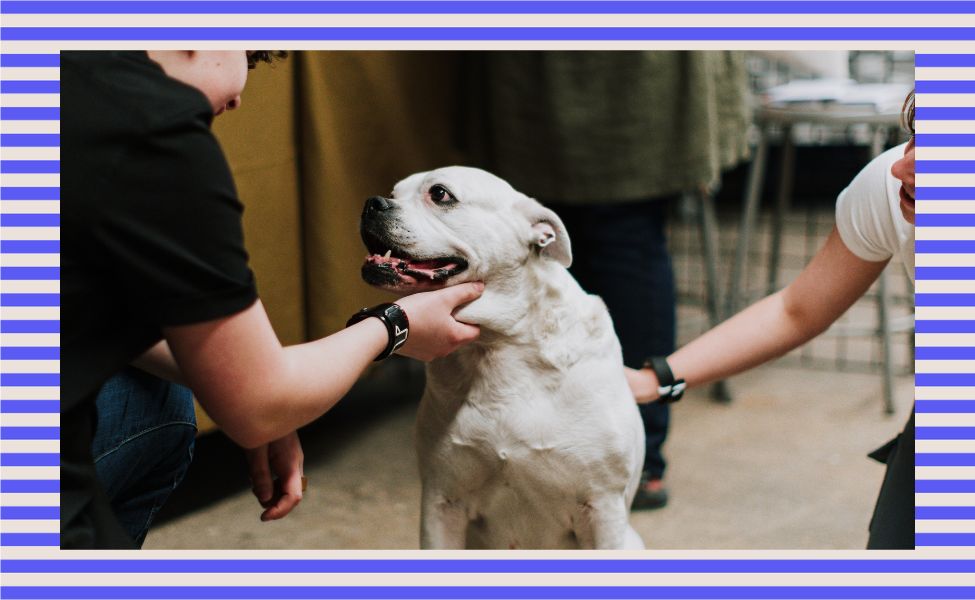
If you’re lucky enough to have a pup who is great at advocating for themselves—when someone touches them in a way they don’t like, they’ll just calmly walk away—you might not need to do much else besides cursory supervision of interactions. (Congrats. You’re living the pet parent dream!)
If your dog doesn’t always make space on their own, though, it’s your job to step in.
You can help your nervous companion get space by:
- Giving directions to the people interacting with them. For example: “She likes to be pet on her chest rather than her head” or “can you take a break to see if he’s still interested?”
- Recalling them to you. As a bonus, this can teach your dog that they have the power to move away on their own over time! (When I do this with Scout, I like to call it “reminding her she has legs.”)
- Putting them in an out of the way area, like a crate, pen, or separate room, if you’re going to be in the thick of some commotion.
When in doubt, ask an expert
If you’re still not sure how your dog feels in a certain situation, you’re in good company. That’s life with sentient beings who can’t communicate with us verbally, after all! Working with a trusted dog trainer or behaviorist can help you decode your companion’s body language and set everyone up for success.
In the meantime, here are some additional resources to check out: