


.avif)
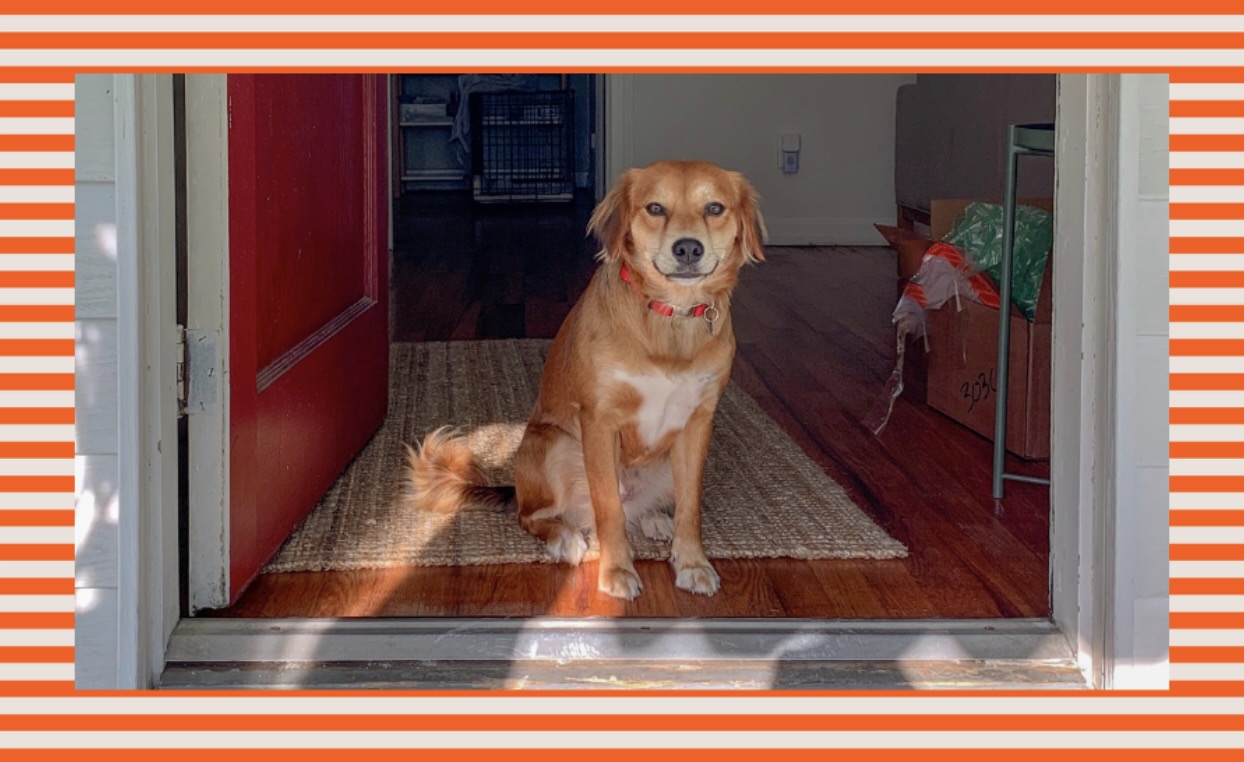
Does your dog have a hard time with visitors? Maybe they frantically jump up to say hello because they can’t contain their excitement. Maybe they shy away from unfamiliar hands because they aren’t looking to make new friends. Maybe they growl or posture stiffly in an attempt to protect their territory. Whatever your pup’s response: We’ve been there. And we’ve got you.
It’s perfectly normal for our pets to react when something changes in their environment. (A non-family member walking through their familiar front door definitely counts as a change.) Our ancestors bred domestic dogs to alert us to commotion! It’s also normal for our pups to behave in ways that we people find impolite or even embarrassing. “Essentially all pet dogs in the United States have at least one moderate to serious behavioral issue,” notes researcher Bonnie Beaver. And “for many dogs, territorial displays are a normal part of their behavioral repertoire,” write Drs. Debra Horwitz and Gary Landsberg.
So if your four-legged companion isn’t exactly host of the year, you’re in good company. Here’s what to try if your dog struggles with guests—either out of excitement or discomfort. Start small, experiment, and figure out what works for your pup.
First: Understand your dog’s behavior
Before we try to change any of our dogs’ behaviors, we should do our best to understand where they’re coming from. Just because we love having people over—or know how to contain our big emotions when they arrive—doesn’t mean our pups automatically feel the same way!
Some dogs struggle with guests because they’re scared
Maybe your dog had a bad experience getting startled by a delivery person, and now they’re wary of new visitors. Maybe they missed some positive exposure during their critical socialization period. Maybe they just aren’t too keen on people who aren’t part of your family group! Nervous dogs might behave in a way that’s easy to recognize—cowering or running away from what they perceive as a threat—but they might also bark, growl, or even lunge in an attempt to make the scary thing go away.
Your dog might have an instinct to protect their territory
Some dogs are naturally more protective of their territory than others. Many livestock guardian breeds, for example, have maintained this instinct even if they live in regular pet homes. “Way back in the early days of domestication, guarding was a dog’s primary purpose,” veterinary behaviorist Sagi Denenberg told the AKC. “Breeds like Anatolian Shepherds and Great Pyrenees were developed to perform the specific purpose of defending their territory.” (You can read more about how much you should focus on your dog’s breed here.)
Your pup might be excited to make new friends!
Your pup might be so thrilled to say hello to your visitors that they can’t quite keep their head on straight. Overarousal is common when our dogs are super happy about something, but it can quickly become a nuisance—or even dangerous, particularly if your guests are small children or elderly adults—when left unchecked.
Some dogs have a hard time with their routine changing
Sometimes dogs struggle with visitors not because of the people themselves but because the situation isn’t what they’re used to. This is particularly possible if you don’t have that many guests throughout the year. The experience can catch your pup off guard!
Your pup might simply be confused
Visitors often interact with our dogs differently than we do—sometimes in subtle ways we don’t even realize at first (like the precise way they talk, bend down to give affection, or try to tell our pups to perform different commands). Because domestic dogs are masters of paying attention to our subtle cues, this can create confusion they aren’t quite sure what to do with!

What’s a Rich Text element?
The rich text element allows you to create and format headings, paragraphs, blockquotes, images, and video all in one place instead of having to add and format them individually. Just double-click and easily create content.

Static and dynamic content editing
Static and dynamic content editing
A rich text element can be used with static or dynamic content. For static content, just drop it into any page and begin editing. For dynamic content, add a rich text field to any collection and then connect a rich text element to that field in the settings panel. Voila!
How to customize formatting for each rich text
Headings, paragraphs, blockquotes, figures, images, and figure captions can all be styled after a class is added to the rich text element using the "When inside of" nested selector system.
Second: Prepare your pup ahead of time
With a better understanding of why your dog’s having a hard time hosting, you can start tweaking your environment and routine to help. Here are a few things to try!
Make sure your dog feels fulfilled
Proper fulfillment won’t, by itself, fix your dog’s behavioral struggles. That said, it’s absolutely one of the first things you should prioritize. A satisfied dog has more capacity to deal with life’s curveballs!
Here are some guides to help you get started with enrichment:
- Find your dog’s favorite enrichment activities
- 101 easy dog enrichment ideas
- Does enrichment have to be expensive?
- How to use puzzle toys thoughtfully
Practice your pup’s regulation skills
No matter the reason your dog struggles with guests, their behavior can benefit from a stronger ability to self regulate. Consider working on training tasks that build impulse control, like “leave it” and sit and down stays. You might also take a look at techniques like trainer Karen Overall’s relaxation protocol.
Teach some helpful cues
On top of strengthening pathways in your dog’s brain to help them better regulate over time, basic training is also great for honing skills that you can eventually use to guide your pup’s decisions the next time you have guests come over. Common options include:
- A “go to crate” or “go to bed” cue (more on giving your pup a safe space next!)
- Recall to help your dog come back to you (read more about why dogs don’t always move away on their own in this article)
- “Off” to tell them to get down if they do jump up
- Sit, down, or other stationary positions to help them keep “four on the floor”
Set up a safe space that’s just for your dog
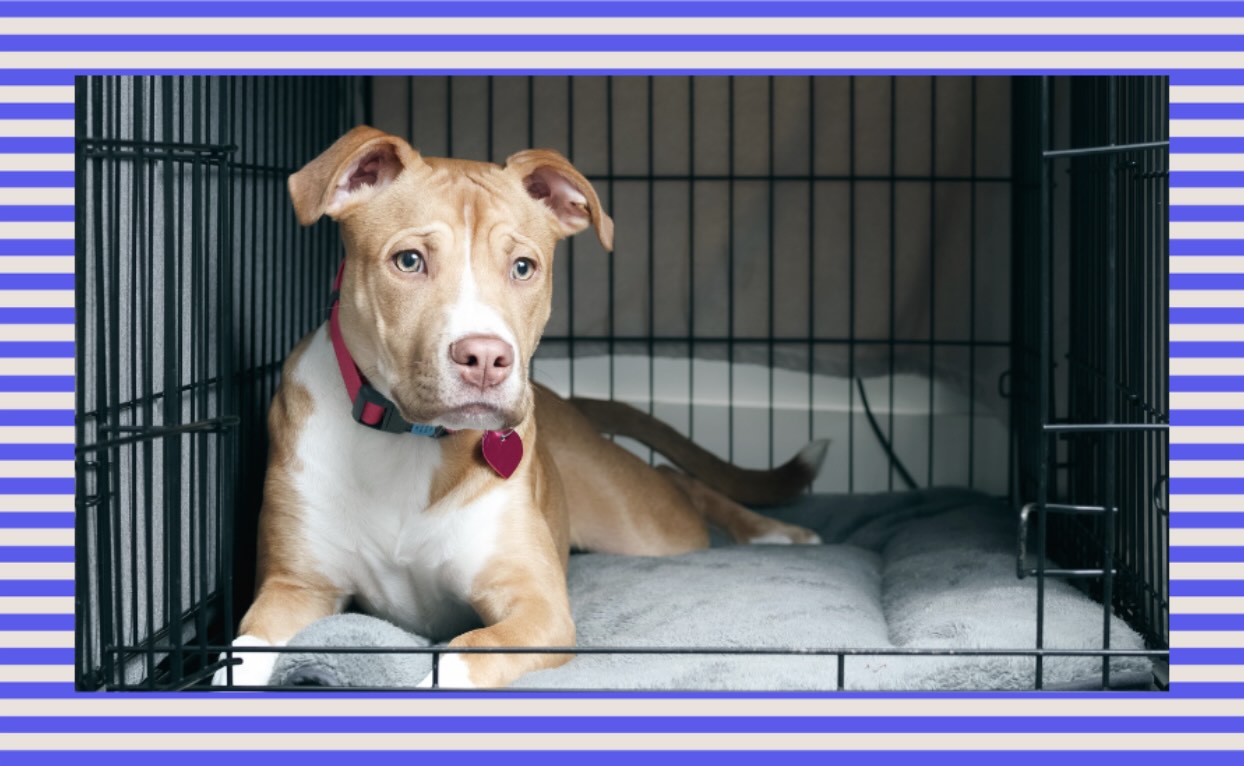
A cozy crate, separate room, or dog bed tucked out of the way can be great for your pup! If your dog’s a little uncertain, they can retreat to their “human-free” zone when they feel overwhelmed. If they’re a little overenthusiastic, you can send them to their quiet space to encourage them to relax.
Third: Tweak the way guests arrive at your home
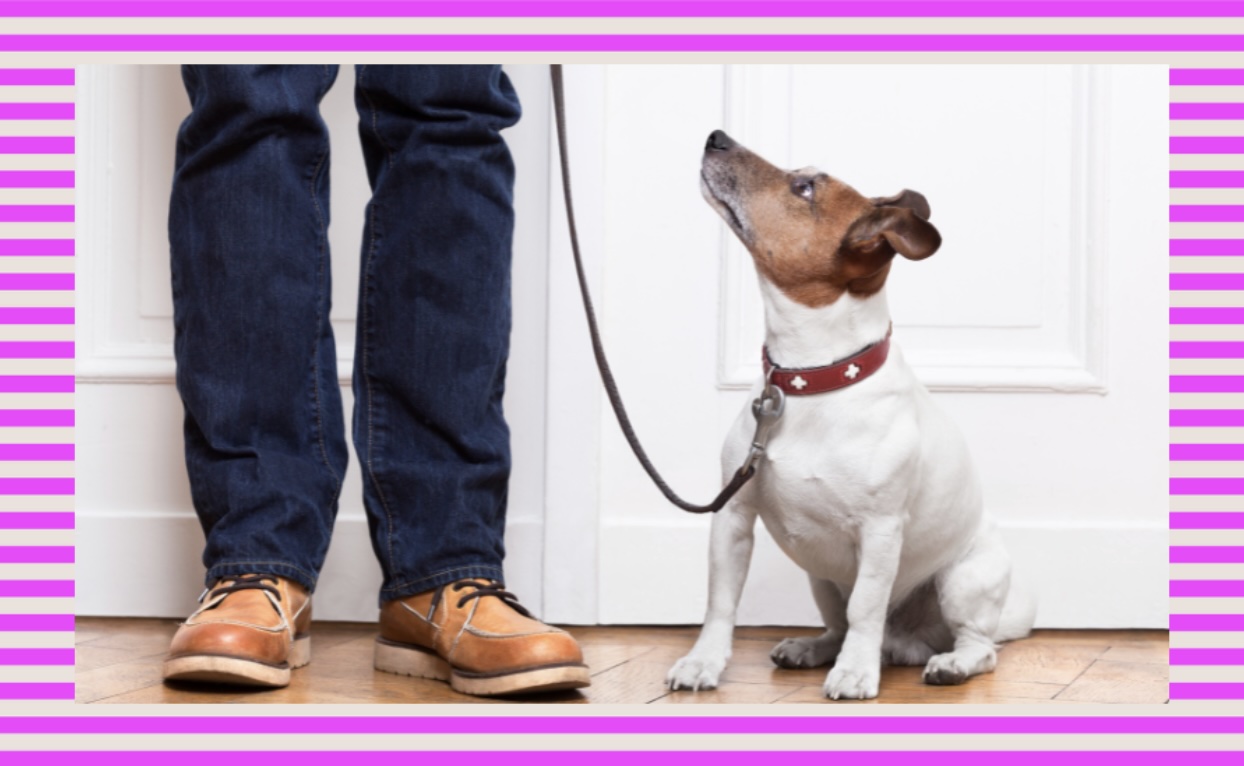
Once you’ve prepped, it’s time to test a few in-the-moment strategies for greeting guests.
If your dog struggles with visitors because they’re too excited…
- Try greeting your guests on more neutral territory before heading inside. Saying hello on the street, for example, can help some dogs diffuse their energy better than right at your front door.
- Ask your dog to perform a cue they already know well, like “sit” or down.” This can give them something to focus on besides the joy of people coming over.
- Be mindful of what behavior you and your guests are reinforcing. “Dogs repeat behaviors that earn them rewards,” writes dog trainer Stephanie Gibeault. “And few things are more rewarding to your pet than your attention.” Try to make sure your pup only gets what they want when they behave the way you want. For example, you might tell your visitors not to coo at, baby talk, or pet your dog unless they’re reasonably calm.
- Help your dog lower their arousal in other ways, like by scattering some treats on the ground for them to sniff out (sniffing lowers heart rate and blood pressure!), offering a calming enrichment toy like a lick mat, or giving them a short break from the action in a separate area. “If dogs are not taught to calm down after their excitement switch is on full speed, these behaviors escalate further and further,” note staff at the Griffin Pond Animal Shelter.
If your dog is uncertain or overwhelmed by guests
- Show your dog you’re happy to see your guests. Don’t force your pup to interact themselves, but let them watch you—their trusted person—hug or otherwise greet your visitors. Domestic dogs can benefit from this kind of “social” or “observational” learning!
- Try saying hello to your guests on neutral territory first. Meeting visitors outside can take some of the pressure off.
- Ask guests to ignore your dog for a little while (or the whole time, if your pup doesn’t warm up to them). Visitors mean well when they come on strong—they’re excited to befriend your pup!—but all that attention can overwhelm our companions.
- Send your dog to their safe space. There’s no shame in your companion opting out of group shenanigans. If they’re more comfortable in their own bed or crate when guests arrive? That’s fine! Just communicate this to your guests so your dog gets the space they need.
- Advocate for your pup. Avoid letting your dog have bad experiences that might stick with them later. “Although dogs with mild fears might habituate with continued exposure, dogs that are constantly exposed (flooded) by an anxiety-evoking stimulus will have their fear heightened until the stimulus leaves,” Horwitz and Landsberg explain. If your visitors are trying to interact with your pup in a way you know they don’t like, step in to help everyone feel safe. This can build your dog’s trust and confidence over time!
Fourth: Seek professional training help
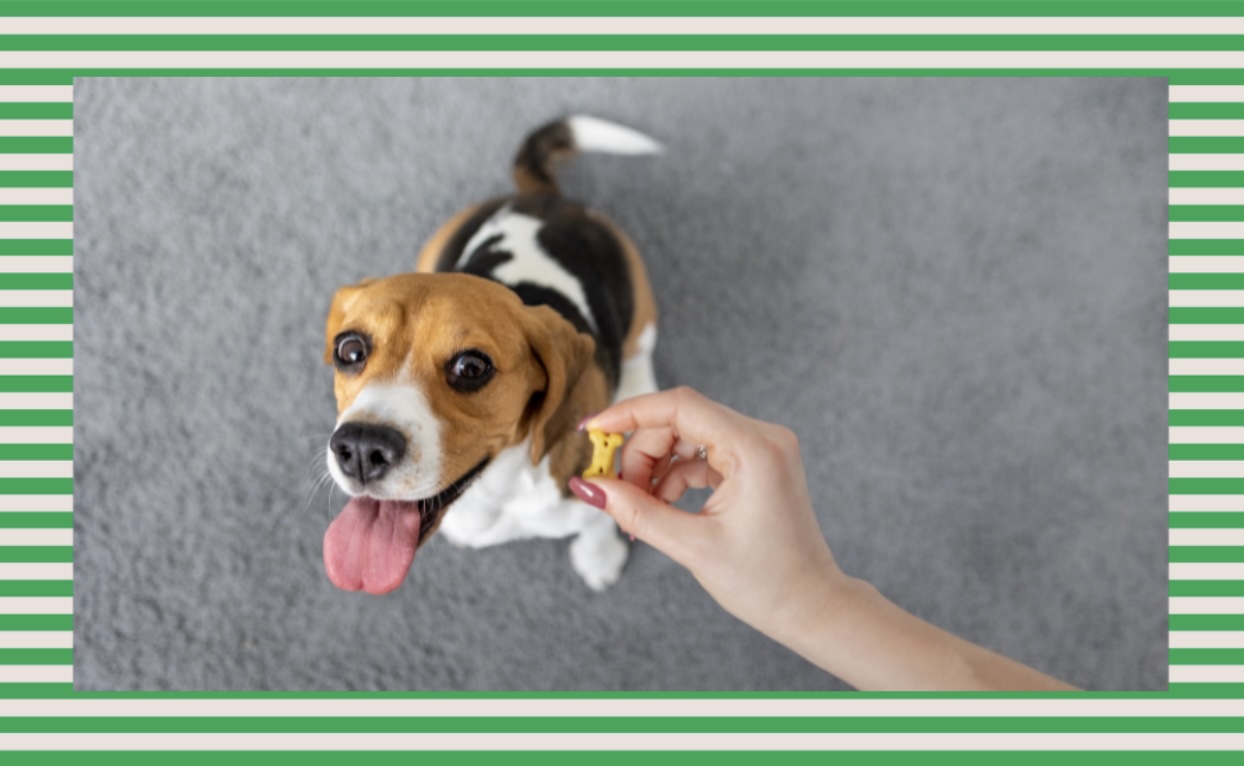
If the above tips aren’t working for your pup—or if your dog’s behavior feels too out of hand to deal with on your own—don’t hesitate to get in touch with a professional dog trainer. They can evaluate your pup’s behavior in person. Then, they’ll work with you to come up with a personalized plan to help everyone feel more relaxed for your next gathering.