


.avif)
There it is again: that slurping sound. The noise that’s come to grate on your nerves. The one that means your dog is licking their paws… again. (And as they lick their paws, they’re also licking the fabric of your couch or rug or whatever surface they’re lying on, infusing it with unflattering canine breath. Ew, right?)
Although dogs don’t self-groom as diligently as cats, many pups do give their feet an occasional clean—so once-in-a-while paw licking is pretty normal. What isn’t normal is if the behavior becomes obsessive or shows no signs of slowing down. Here’s what to try if that’s the case with your own dog! Step by step:
- Understand why dogs chew and lick their paws
- Make sure your pup feels okay physically
- Provide your dog with exercise and enrichment
- Interrupt and redirect your pup’s licking behavior
- Prevent future paw irritation
Understand why dogs chew and lick their paws
Not all paw-licking stems from the same source. Because the underlying cause of your dog’s behavior influences your best course of action to stop it, the first thing you should do is learn why some dogs bite, chew, and lick parts of their own body.
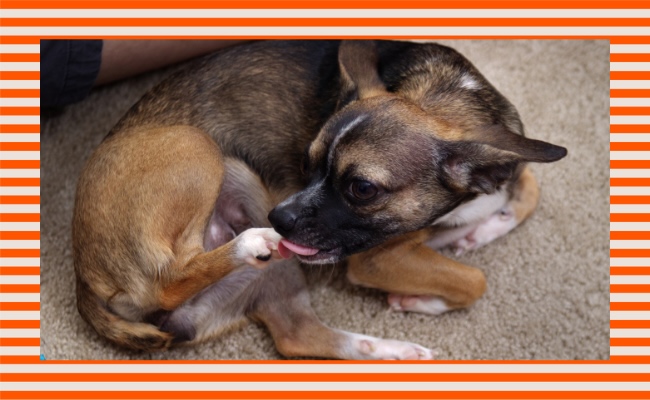
Physical causes of excessive paw licking
Pododermatitis is a broad term for inflammation of your dog’s paw skin. This inflammation creates itchiness, and your pup relieves the discomfort the best way they know how: by using their mouth. (After all, our dogs can’t scratch their paws with, well, their other paws. Consider that a reminder not to take our own opposable thumbs for granted.)
Many things can cause pododermatitis—and sometimes, the root cause is actually a combination of multiple factors. The most common culprits include:
Allergies
Both environmental allergies (like to grass) and food allergies (like to a specific animal protein) can cause surface-level symptoms on your dog’s skin. Of these types, environmental allergies are the most common. Banfield Pet Hospital’s State of Pet Health report saw a 30 percent increase in environmental allergies from 2008 to 2018, and some vets believe both climate change and reduced exposure to beneficial microorganisms play a role in those numbers.
Food allergies are less common but can be even more complicated. “Adverse food reactions can either have a true immunological basis (food allergy) or can occur as a result of toxic or idiosyncratic reactions to food (food intolerance),” says Hilary A. Jackson, BVM&S. This is why an accurate diagnosis depends on a diet trial, where your vet helps you eliminate potential allergens and then slowly reintroduce them one at a time.
Seasonal dry skin
“Dogs are more susceptible to dry skin during the winter months,” say veterinarians Lindsey Sealey and Carlos Rossetti, “especially in areas where central heating is used to warm the home.” Unfortunately: ‘Tis the season! And the same way our own skin tends to itch when it gets too dry, so does our dogs’.
Injury and infection
Fungal infections (like ringworm or yeast dermatitis) and bacterial infections can cause pododermatitis. So can acute injuries—which can also become infected if left untreated—like those from your pup getting a thorn or bur stuck in their paw pad.
Parasites
Finally, an uncomfortable truth: Parasites like hookworms or mites can also inflame our pups’ paws and result in compulsive licking behavior.
If you’re like me and this section has you starting to itch in your own seat, take a deep breath and remember that the majority of common parasites are pretty easy to get rid of with the right treatment plan. (Phew.)

What’s a Rich Text element?
The rich text element allows you to create and format headings, paragraphs, blockquotes, images, and video all in one place instead of having to add and format them individually. Just double-click and easily create content.

Static and dynamic content editing
Static and dynamic content editing
A rich text element can be used with static or dynamic content. For static content, just drop it into any page and begin editing. For dynamic content, add a rich text field to any collection and then connect a rich text element to that field in the settings panel. Voila!
How to customize formatting for each rich text
Headings, paragraphs, blockquotes, figures, images, and figure captions can all be styled after a class is added to the rich text element using the "When inside of" nested selector system.
Mental and emotional reasons dogs lick their paws
Anxiety
According to the ASPCA (and confirmed heartily by my own anecdotal experience as the guardian of a very sensitive dog), “chewing can relieve mild anxiety or frustration.” This is well and good when the object your pup decides to chew is an appropriate bone, ball, or other toy. When they go for their own body, though? Not so much.
Boredom
“Just like you may rub your hands together or play with your ring when you are anxious,” writes Jacque McAndrew, DVM, “your dog finds something to distract from their stress.” Often, our pups turn to licking, biting, and scratching whatever’s available—and if we’re honest, their paws are always available.
Plain old habit
This is particularly common in dogs who had a physical reason to lick their paws in the past—say, they were treated for environmental allergies—and now continue the behavior even with a clean bill of health. Habits can be hard to kick!
Make sure your pup feels okay physically
Now that you have some more background about what can push your pup to lick their paws, it’s time to see if you can identify any physical problems at the root of your dog’s behavior.
Take a close look at your dog’s paw pads
Do you notice any obvious signs of irritation—like redness, swelling, or scabs? If so, chances are you’ve found the issue! (Sometimes it really is this simple.) Your vet can help you devise an appropriate treatment plan to get your pup feeling great again.
Visit your vet for a full checkup
If you don’t notice any clear signs of something wrong but your dog keeps licking, it’s a good idea to let your vet know. They can perform a thorough checkup—and run tests you can’t do on your own at home—to see if there’s a problem beneath the surface. If so? You’ll be able to treat it with a specific combination of medicated creams, wipes, and environmental changes.
If all the results come back great, though? Then you know to take a deeper look into mental and emotional causes of paw licking. It’s important to rule out medical causes first so you don’t try to treat a physical issue purely with a behavioral approach.

Provide your dog with exercise and enrichment
Although proper fulfillment won’t automatically fix every problem you experience with your dog, it’s one of the most important things we can do to set our companions up for success. This is especially true if your pup licks their paws out of boredom or anxiety!
We’ve put together plenty of guides to help you enrich your pup’s life:
- Find your dog’s favorite enrichment activities
- 101 easy dog enrichment ideas
- Does enrichment have to be expensive?
- How to use puzzle toys thoughtfully
And one of our latest deep-dive guides focuses on scavenging enrichment, which can be a perfect alternative for pups who are caught in a pattern of chewing their own paws.
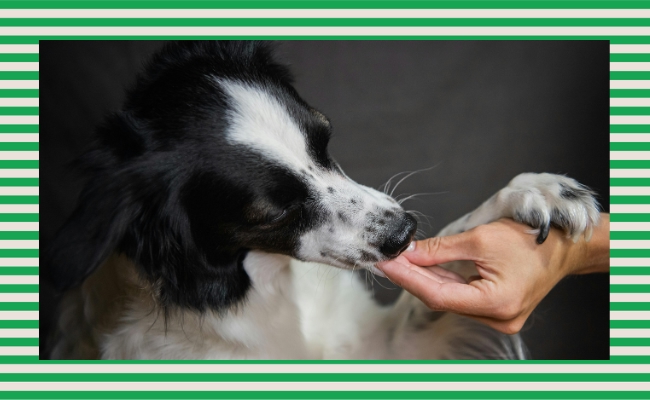
Interrupt and redirect your pup’s licking behavior
You can help your dog develop better long-term habits by 1) interrupting them when they start to lick and 2) offering an alternative. For example:
- When you notice your dog licking their paws, get their attention with a verbal sound or soft touch.
- Once they stop licking to look at you, immediately give them something else to focus on. This could be a favorite chew (a great choice if your pup has some anxious energy they could use help channeling), another go-to toy, a puzzle feeder, or simply the opportunity to perform a few cues they already know to earn a treat or two (like “sit” or “touch”).
- Over time, this can teach your dog that when they have the urge to lick, there are tons of other things they can do instead!
Note: Interruption and redirection should be the final step to address your dog’s licking, after you’ve confirmed whether or not they’re suffering from physical symptoms—and if so, only once you’ve started on a treatment plan. It’s not fair to try to change our pups’ behaviors without first addressing their medical needs!
Be careful not to accidentally reward your dog’s paw licking
Be wary of simply giving pup a special chew every time you catch them licking their paws. Some dogs are incredibly smart and will pattern map that licking earns attention (and other goodies) from you. That can actually reinforce the behavior, which is the exact opposite of what we want to do!
You can reduce the chances of your dog making this association by:
- Changing up the way you redirect your pup’s attention away from licking (sometimes offering a chew, sometimes asking for simple known cues, sometimes just letting them be after your initial interrupter)
- Decreasing the number of rewards you give your pup over time, as they start to get into the habit of licking less and less
Don’t stress too much here. This is really just something to watch for over time—particularly if you’ve got a pup who likes training games.
Prevent future paw irritation
Once your dog is licking less, you can prevent future relapses by adding a few paw care tasks to your existing grooming routines.
- Once a week or so, inspect each of your dog’s paws.
- Don’t forget to gently spread their toes apart to check for irritation or debris between them!
- Then clean any suspicious spots with a mild, pet-safe rinse.
- Keep track of changes—like if you notice new or worsened inflammation—so you can let your vet know early.
You might consider wiping your pup’s feet off after walks, too, especially if you find yourself strolling through patches of road salt, lawncare pesticides, or other irritants. (You can also look into protective booties or balms to prevent contact here in the first place. It’s about finding the approach that your individual dog finds most comfortable!)